Some of the most evocative vineyards in Europe look less like farming than sculpture: trunks twisted into knots, gaps in the rows where a vine has finally given up, a stony slope that has been picked by hand for the better part of a century. That age is real, and it does change what ends up in the glass. But old vines are also the easiest story in the wine trade to sell, so the words on the label deserve a harder look than a bottle usually gets. What follows is what vine age genuinely does, what it does not, and how to judge whether the premium is worth paying.
What vine age actually changes in the vineyard
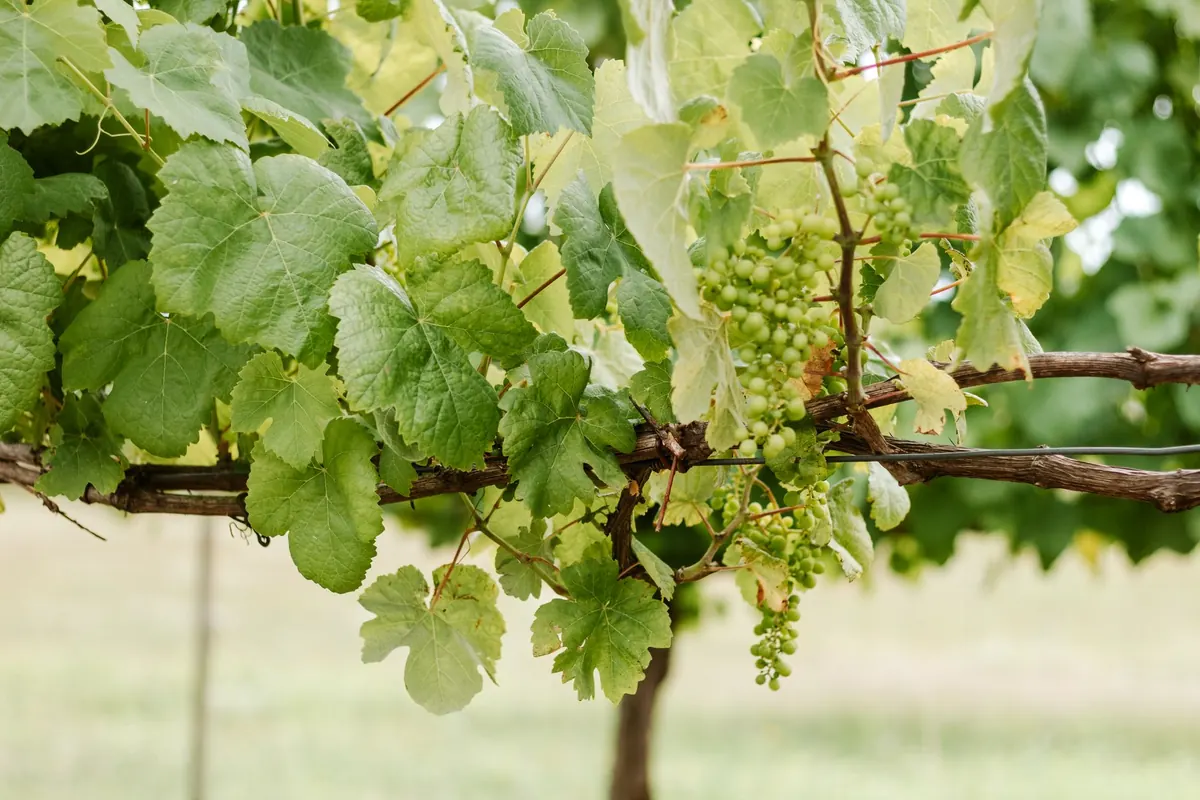
A vine planted this year spends its first seasons building roots and a trunk. Left alone, it would rather grow shoots than ripen fruit, and whatever fruit it does set tends to be plentiful and thin. Somewhere between its third and seventh year it settles down and starts behaving like a vine rather than a shrub.
Two things shift most with time. The first is the root system. A mature vine's roots reach well below the topsoil, past the layer that dries out first in a hot summer, which is why old plantings often ride out drought better than young ones. The second is the ratio of fruit to leaf. Older vines tend to set fewer bunches and smaller berries, so the same canopy is ripening less fruit. Smaller berries mean a higher proportion of skin to juice, and because colour, tannin and much of the aroma live in the skin, that usually shows up as a wine with more density and grip.
Mature vines also carry reserves — carbohydrates stored in the trunk and roots — that help them recover from a poor flowering or a late frost and still ripen a crop. And a vineyard that has survived forty or fifty years is, by definition, planted somewhere that suits it. The site is often doing as much work as the age.
Concentration is not the same as quality
The word usually reached for with old-vine fruit is concentration, and it pays to be precise about it. Concentration is not ripeness, and it is certainly not quality. A small, thick-skinned crop can give a wine that is dense and chewy but also coarse, if the grower picks too late or extracts too aggressively. Old vines on a poor site, cropped punishingly low, or handled by someone who mistakes weight for character, will produce wines that are simply heavy.
At their best, though, old vines give intensity without heaviness: fine-grained rather than gritty tannin, and a length of flavour that outlasts the swallow. That combination comes from age plus farming plus picking decisions, not from age alone.
What the labels actually promise
The vocabulary is easy to recognise once you know it:
- Vieilles vignes — French, the phrase most of us meet first.
- Viñas viejas or vinyes velles — Spanish and Catalan.
- Vinhas velhas — Portuguese, common on Douro and Dão labels.
- Vecchie vigne — Italian.
- Alte Reben — German and Austrian.
- Old vine or old bush vine — English-speaking producers, the latter usually meaning head-trained and ungrafted.
In most of the world, none of these terms is legally defined. A producer can print vieilles vignes on a label for a fifteen-year-old vineyard, and a few do. Where frameworks exist they are voluntary and set thresholds rather than guaranteeing quality: South Africa's Old Vine Project certifies vineyards from 35 years upwards, and the Barossa Old Vine Charter in Australia uses bands climbing from 35 years to 125 and beyond. Both are useful signals, neither is a promise.
It also works the other way. Plenty of old-vine fruit is never advertised at all, because the winemaker wants depth and structure in a flagship blend rather than a story on the front label.
Where old vines earn their keep
Age tends to reward varieties that can carry concentration and still hold their acidity. Old bush-vine Grenache, Carignan and Mourvèdre in the Languedoc, Roussillon and Priorat; old-vine Chenin Blanc in the Loire and across the Swartland and Stellenbosch; Semillon in the Hunter Valley; Zinfandel in California; Palomino in Jerez. These are grapes that respond well to lower yields and small berries without turning clumsy.
Elsewhere, age buys you much less. Where a wine is prized for delicate aroma and freshness above all — think of the lighter aromatic whites — an old, low-yielding vineyard can leave you with a wine that is textured but short on the lift you were after. Old vines are a style, not a medal.
When young vines are the better buy
Vine age is one variable among several, and rarely the decisive one. Clone and rootstock selection, canopy management, picking date and sorting in the winery all shape a wine at least as much. A carefully farmed twenty-year-old vineyard on a good slope will beat a neglected sixty-year-old one almost every time.
It is also worth remembering that many of the most admired wines in the world come from vines of twenty to thirty years — old enough for balance, young enough for consistency. And a replanted site, with a grower who has farmed that slope for decades, can be superb long before the vines qualify as old.
When age is worth paying for
Work through these before you spend up:
- The vineyard or grower is named. Specificity suggests the producer is proud of the source rather than reaching for a marketing phrase.
- The variety suits the style. If you are buying Grenache, Carignan, Chenin or Semillon, old vines are likely to give you something extra. If you want a crisp, aromatic white, they may not.
- Farming matches the claim. Old vines that are dry-farmed and cropped low are doing the work. Old vines pushed for volume are not.
- You like the style. These wines tend to be savoury, earthy and textural, less about bright primary fruit. If that is not what you enjoy, you are paying a premium for someone else's taste.
- The price reflects scarcity, not just story. Old vineyards produce a fraction of what a young, irrigated one gives, so some premium is honest. A three-fold markup over a neighbour's comparable wine is not.
A note on ungrafted, pre-phylloxera vines: genuinely interesting, and often genuinely good, but the difference is frequently overstated and it is not the same thing as age. Beware of the two being blurred together on a back label.
A practical way to spend the money
Treat old-vine wording as a pointer to a style rather than a grade. Buy one bottle, note the producer, and if you like it, follow that producer rather than the phrase — track record beats label age every time. Ask in a good independent shop which old-vine bottles they drink themselves; staff who taste widely will tell you which appellations are genuinely worth the premium and which are coasting on romance. And if you are buying for the cellar rather than the dinner table, take advice from a specialist merchant: provenance, storage and demand matter far more to value than the age of the vines.
Finally, remember that the pleasure of an old-vine wine is often quiet rather than loud. It shows in the texture, the length, the way it holds together on the second day. If a bottle does that, the price was probably fair. If it does not, the vineyard's age is someone else's story.
Photo: Ana Vieira / Pexels